The centre, monastery and harbour are walkable. Nissi Beach is about 3 km west; Cape Greco begins about 3 km east of the harbour — easy by bike, car or bus.
1 Cape Greco National Forest Park
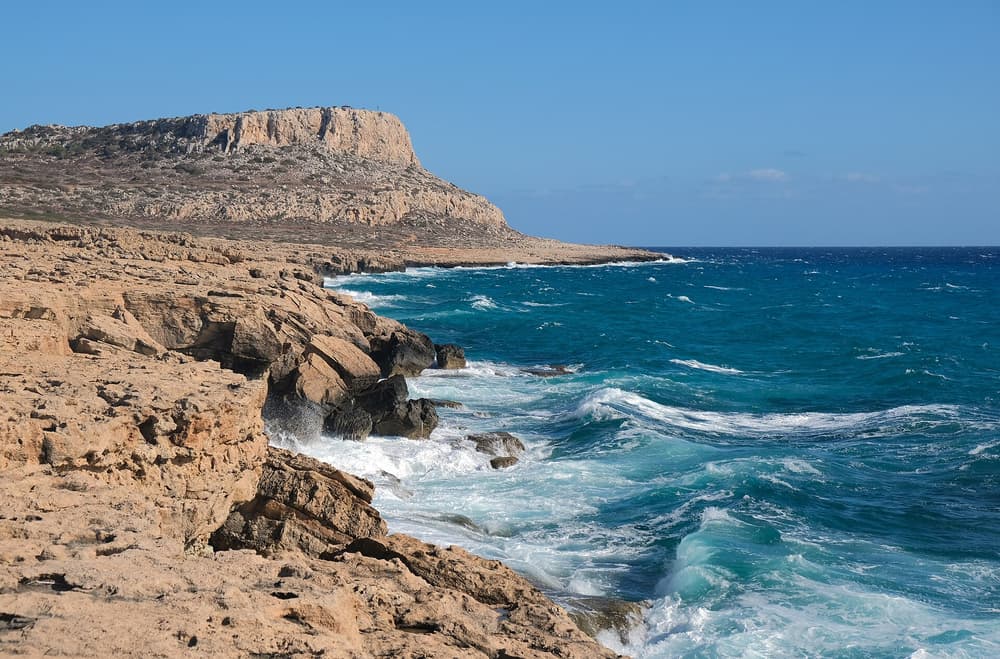
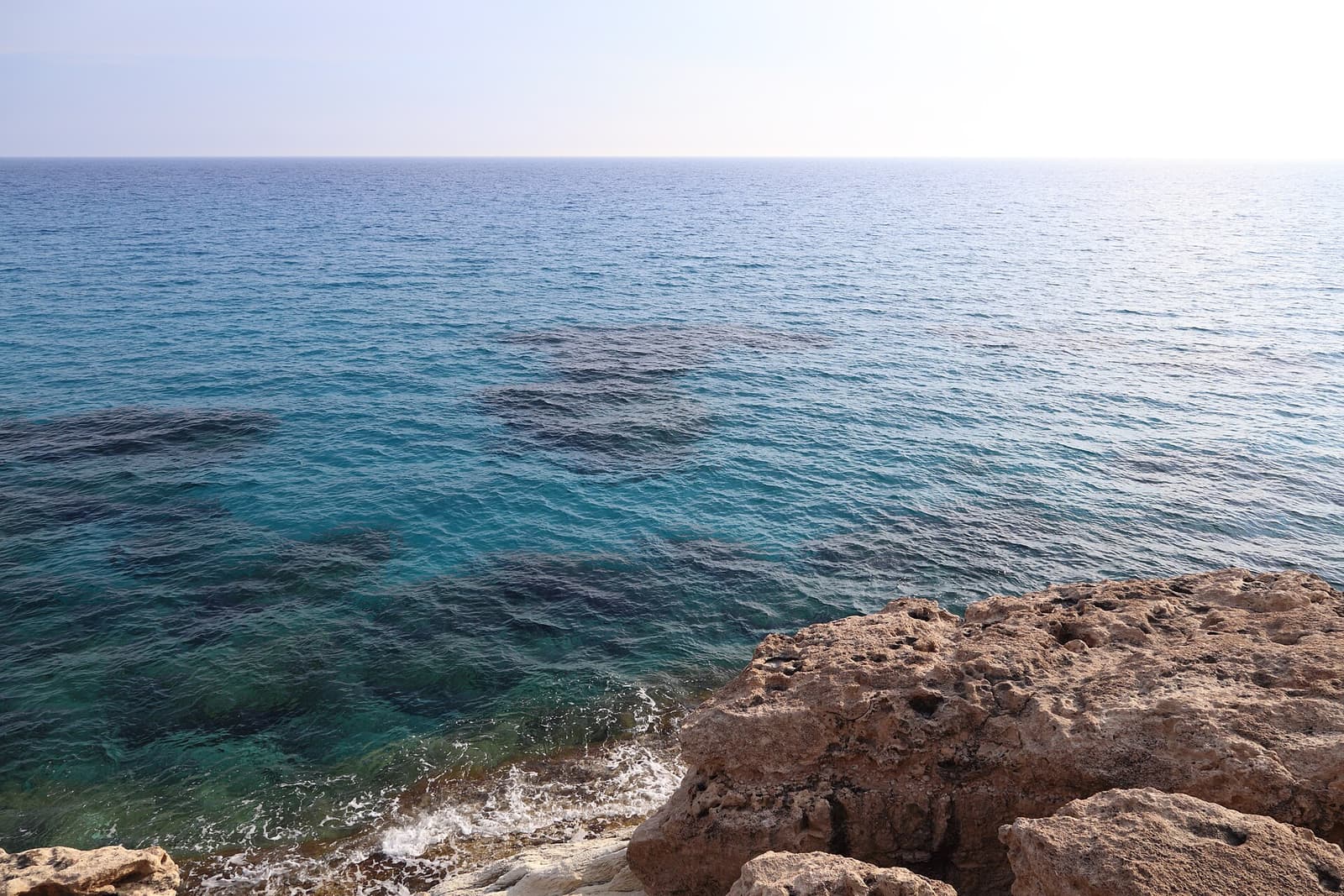
A protected headland of low limestone cliffs, juniper scrub and rocky coves at the south-eastern tip of Cyprus. Trails lead to lookouts, the small chapel of Agioi Anargyroi above the sea, and the cape itself (the tip is occupied by military and broadcasting masts). The water is famously clear.
Practical: Free. Car parks at the main viewpoints. Little shade — carry water.
2 The sea caves
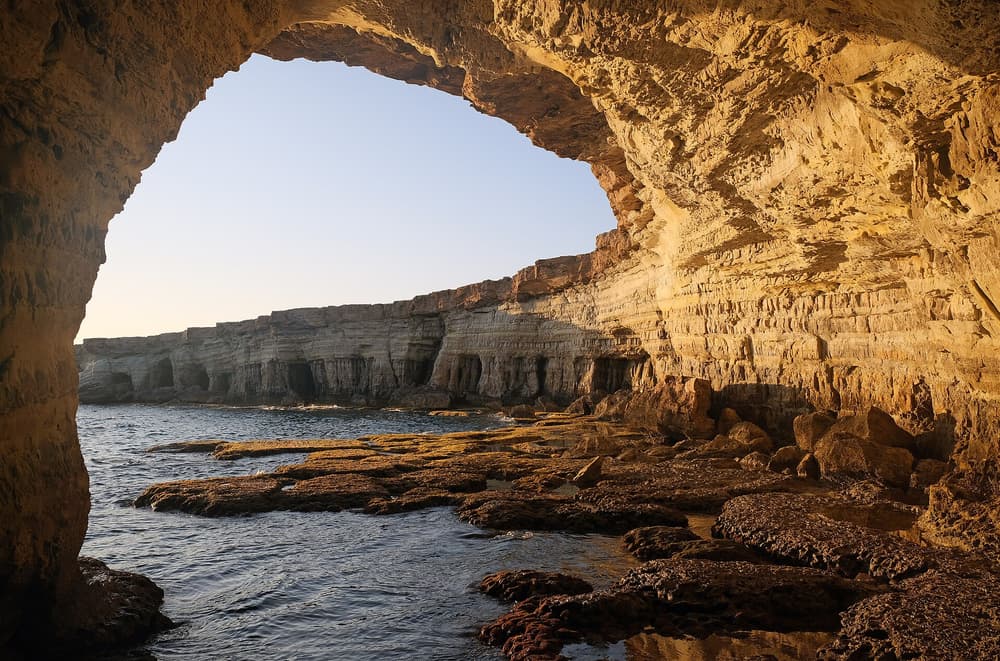
On the coast between Ayia Napa and the cape, waves have carved arches and caves into the cliffs. They are spectacular from above and from the water, and a favourite stop for cruise boats.
Practical: Free. Stay back from cliff edges; the rock can be undercut.
3 The natural bridge (Lovers’ Bridge)
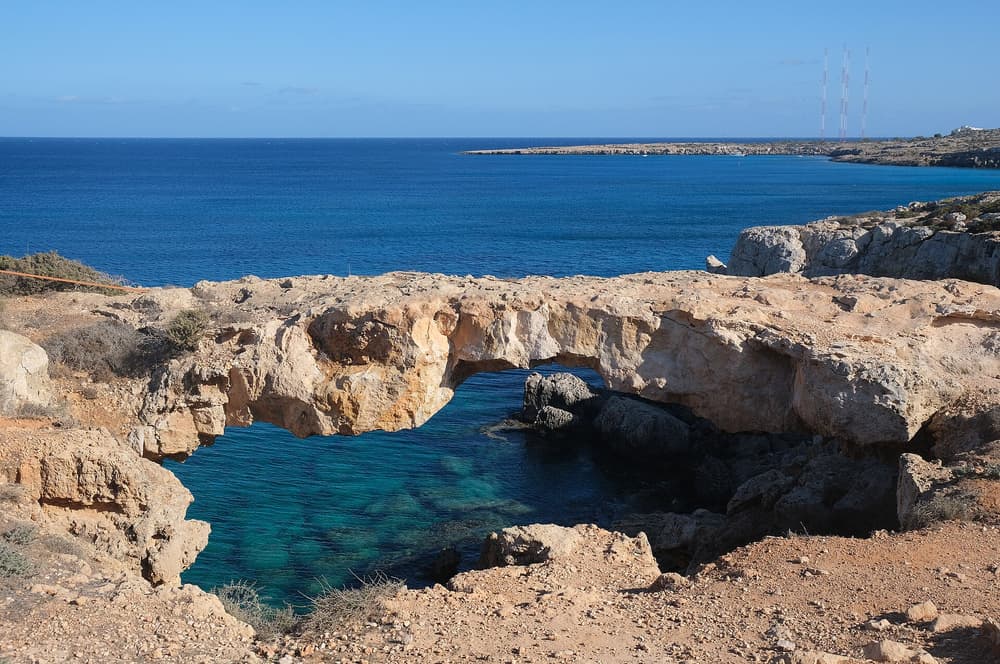
A rock arch over the sea on the Cape Greco coast, popular for photographs — especially at sunrise.
Practical: Short walk from the coastal road. Do not climb on the arch.
4 Nissi Beach
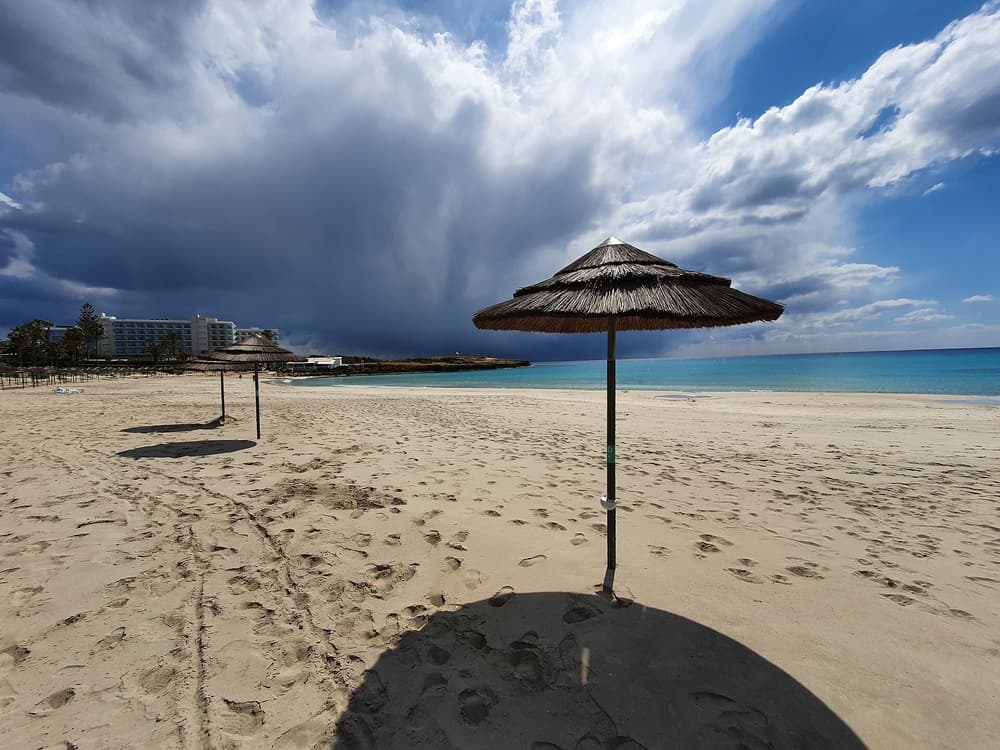
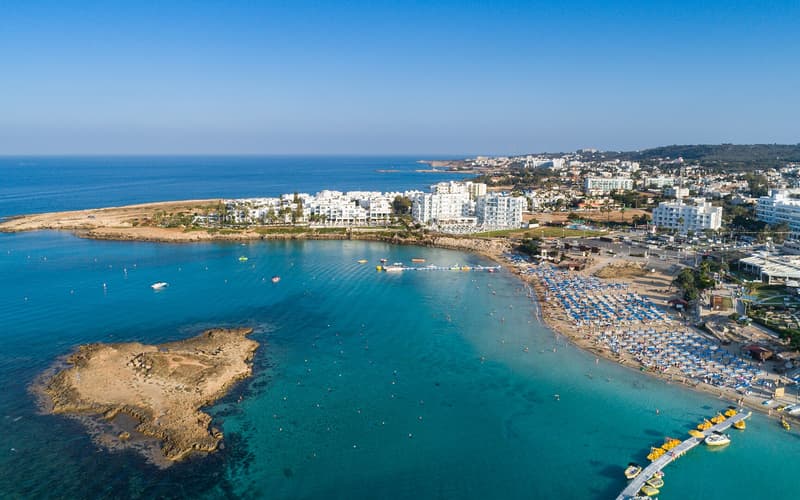
Ayia Napa’s most famous beach: white sand, shallow turquoise water and beach bars. Busy and lively in summer.
Practical: Sunbeds and umbrellas for hire; buses along the coast road.
5 Ayia Napa Monastery
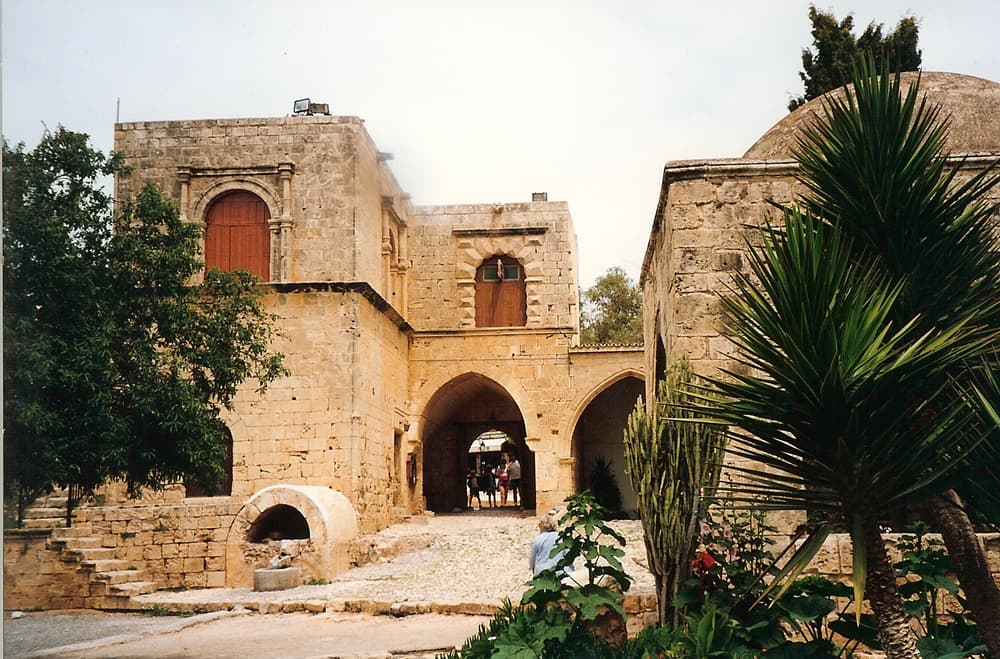
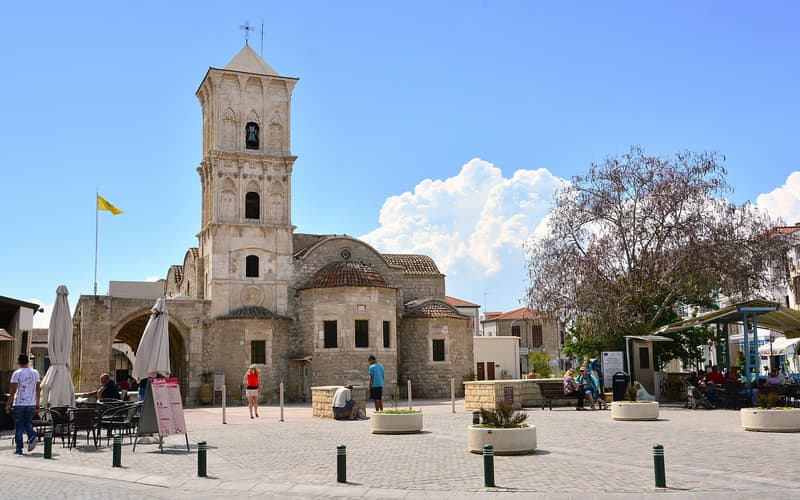
A walled monastery from the Venetian period, built around a cave chapel with an icon of the Virgin, with an arcaded courtyard, an octagonal fountain and a huge old tree — a calm spot in the middle of the resort.
Practical: Free; dress modestly. In the town centre.
6 Nissi islet and the sandbar
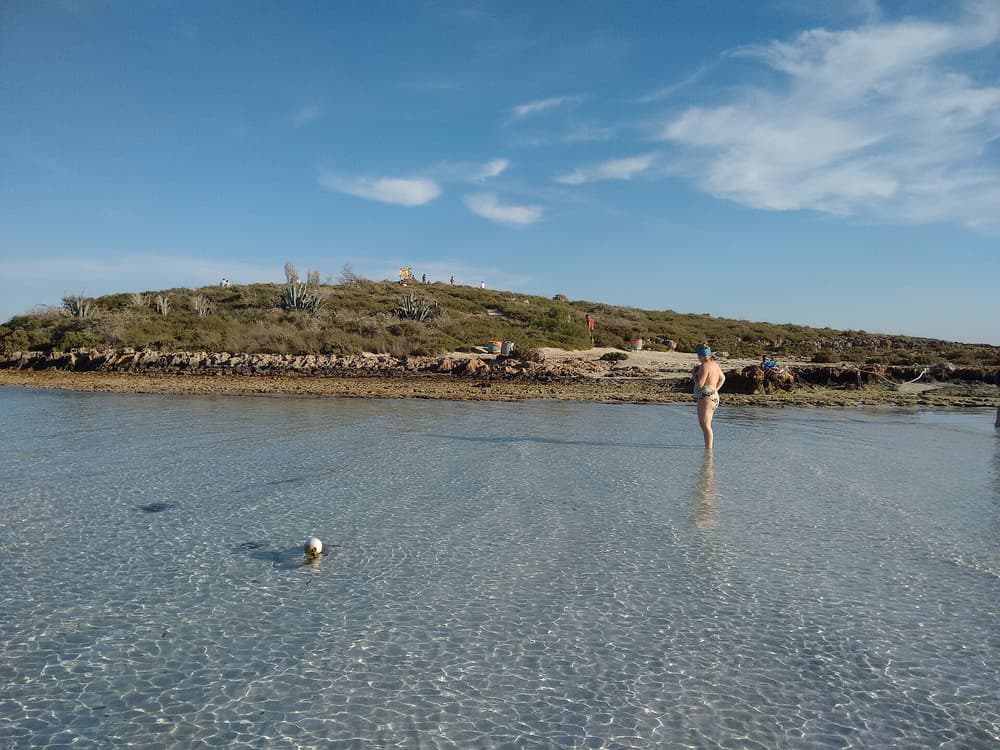
At the western end of Nissi Beach a shallow sandbar leads to a small rocky islet; on calm days you can wade across, waist-deep or less.
Practical: Watch for boats and do not cross in rough sea.