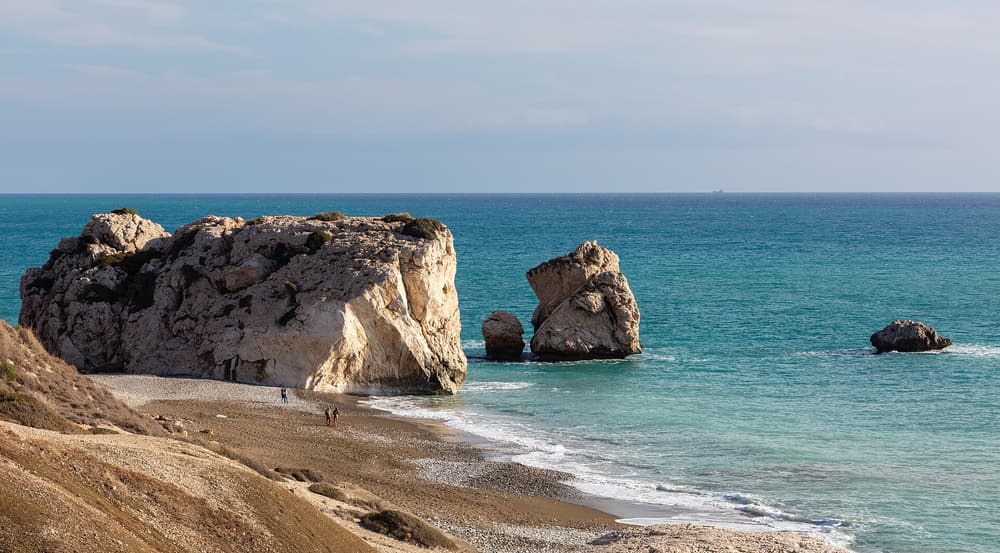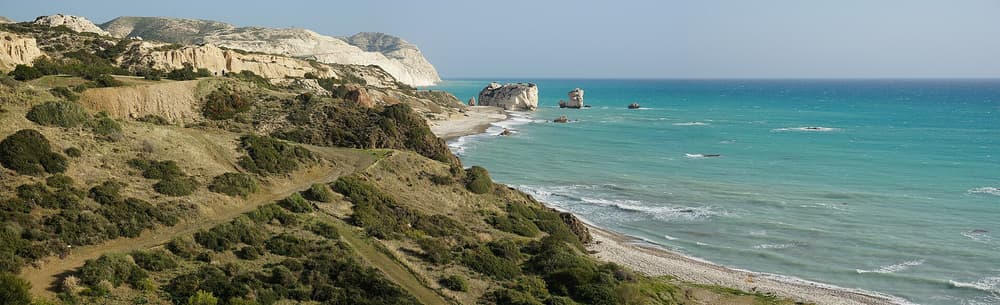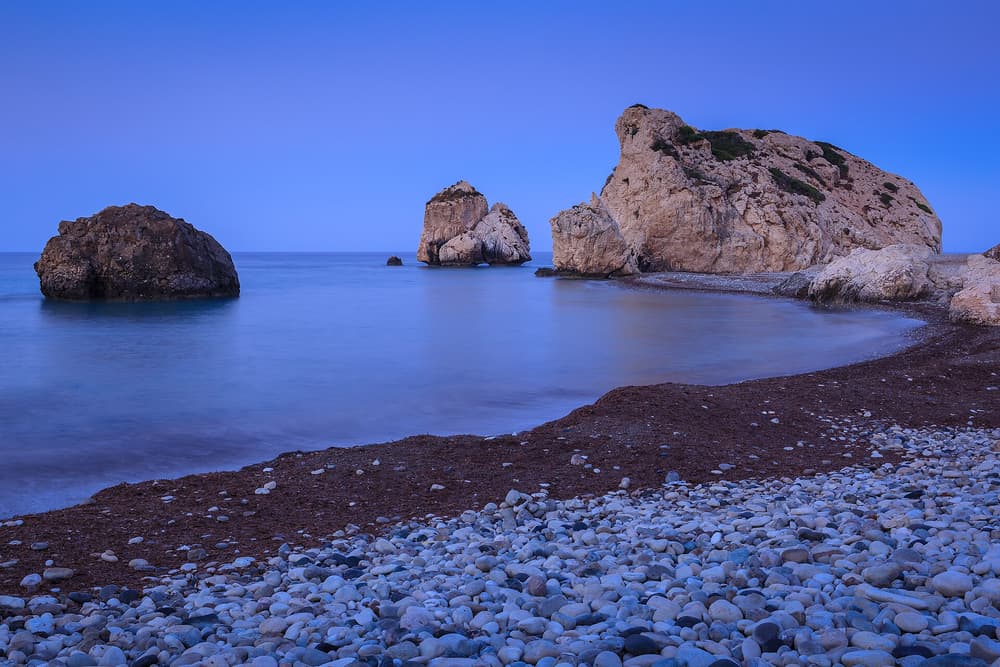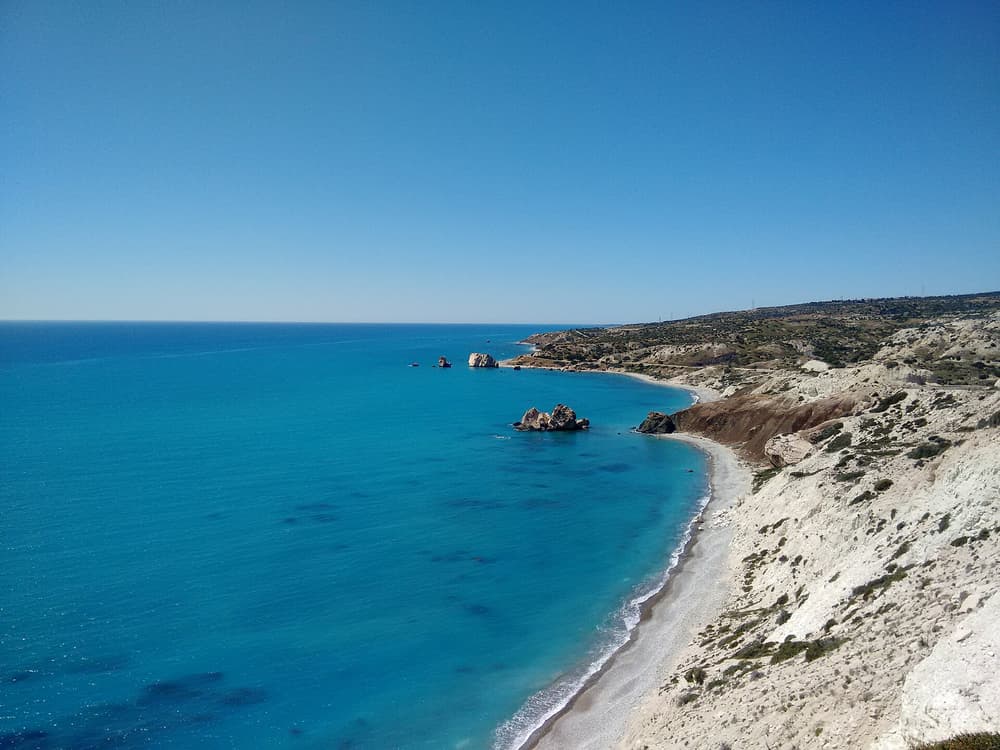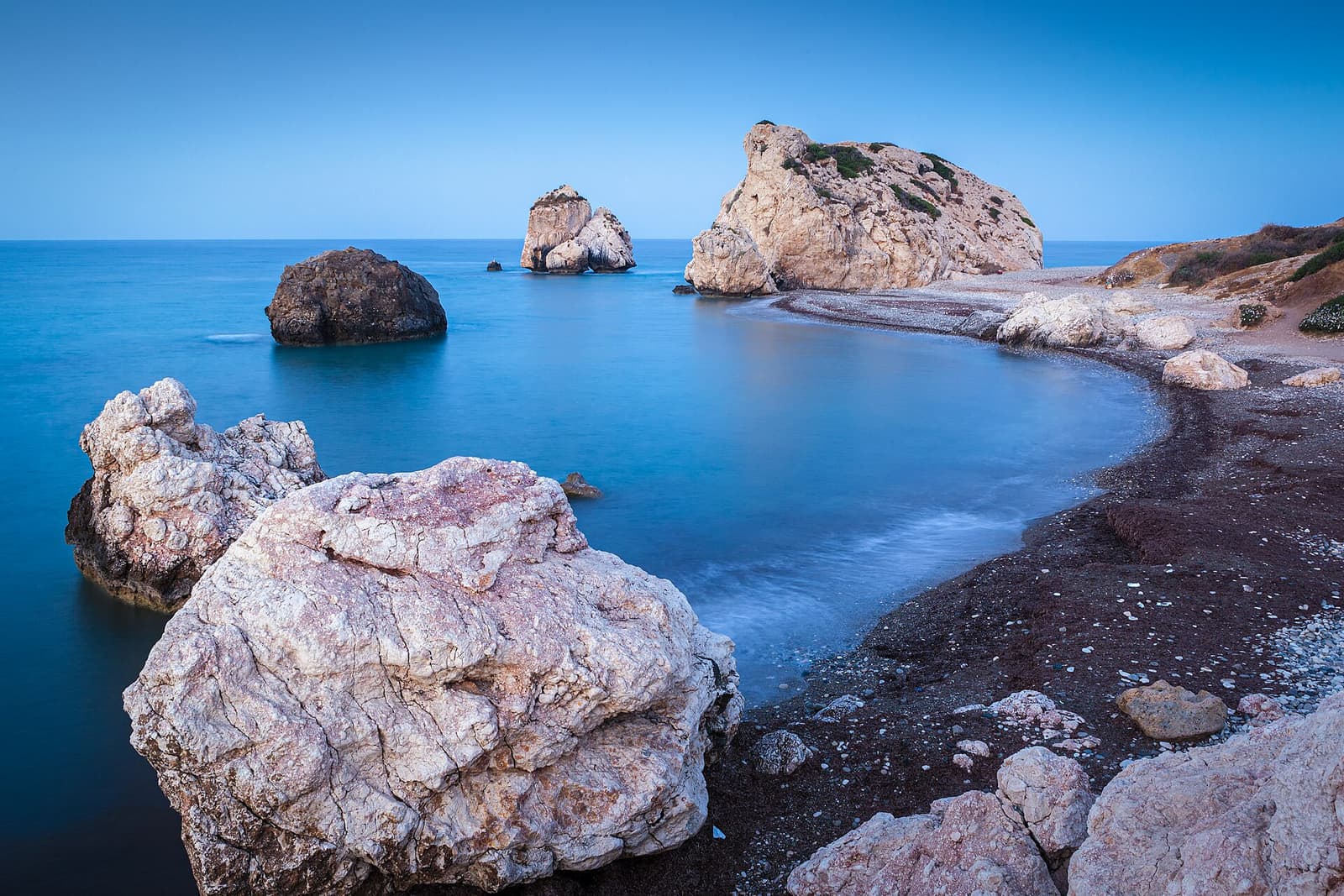
Petra tou Romiou — “the Rock of the Greek” — is a cluster of sea stacks off a pebble beach about 25 km east of Paphos, below the old coast road to Limassol. In Greek mythology this is where Aphrodite emerged from the sea foam, which is why everyone calls it Aphrodite’s Rock. The name Petra tou Romiou comes from a later legend about the Byzantine hero Digenis Akritas hurling rocks at invading pirates.
It is a short stop rather than a destination in itself: a viewpoint, a beach and a swim. But it pairs naturally with Palaepaphos at Kouklia, the ancient sanctuary of Aphrodite a few kilometres west, which is part of the Paphos UNESCO World Heritage Site — and with the village of Pissouri and its bay to the east, the nearest place to stay. Most visitors see the rock on the drive between Paphos and Limassol, or on a coach day trip.
Highlights
- The rock and the beach — the classic Cyprus photograph, best at sunset.
- A swim at the birthplace of Aphrodite — local lore says swimming around the rock brings eternal youth.
- The viewpoint on the cliff road just east, for the panorama of the bay.
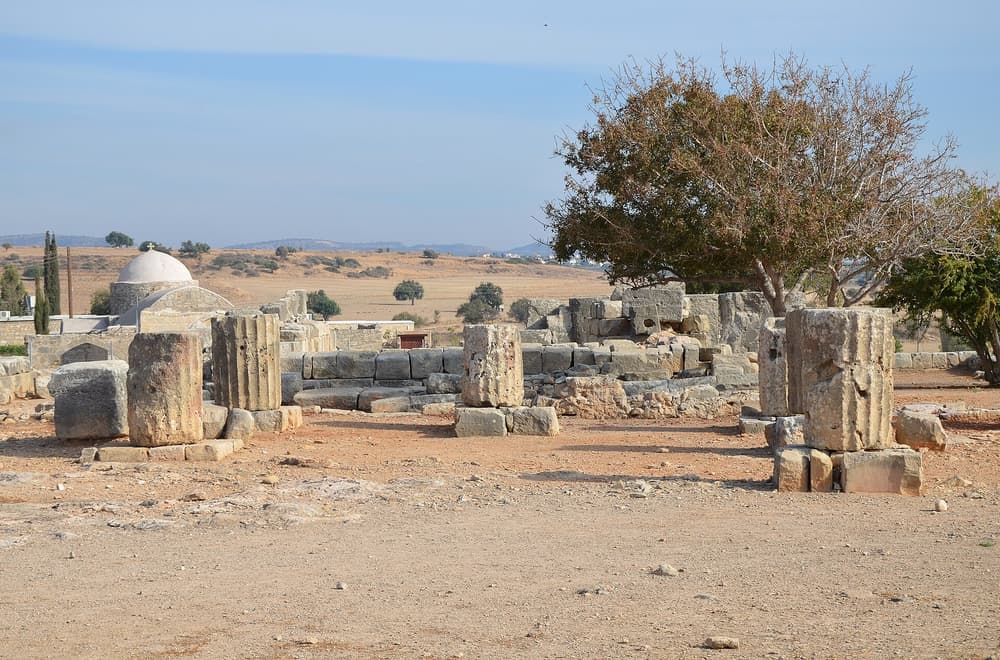
- Palaepaphos (Kouklia) — the Sanctuary of Aphrodite and a small museum in a medieval manor house.
- Pissouri Bay — a sheltered beach and a hilltop village for an overnight stay.
Quick facts
| Where | South-west coast, between Paphos and Limassol (Paphos district) |
|---|---|
| Currency | Euro (€) |
| Airport | Paphos (PFO), about 25 min by car |
| Ideal stay | 1–2 hours; a night in Pissouri if you want more |
| Best for | Photography, a swim, mythology |
| Getting around | Car; some Paphos–Limassol buses and many tours stop nearby |
How long to stay & where to base yourself
An hour or two is enough for the rock, the beach and a swim; add an hour for Palaepaphos at Kouklia. If you want to see it at sunset and sunrise without driving, stay in Pissouri (about 15 minutes east), which has a resort hotel on the bay and apartments in the village, or in Paphos.